
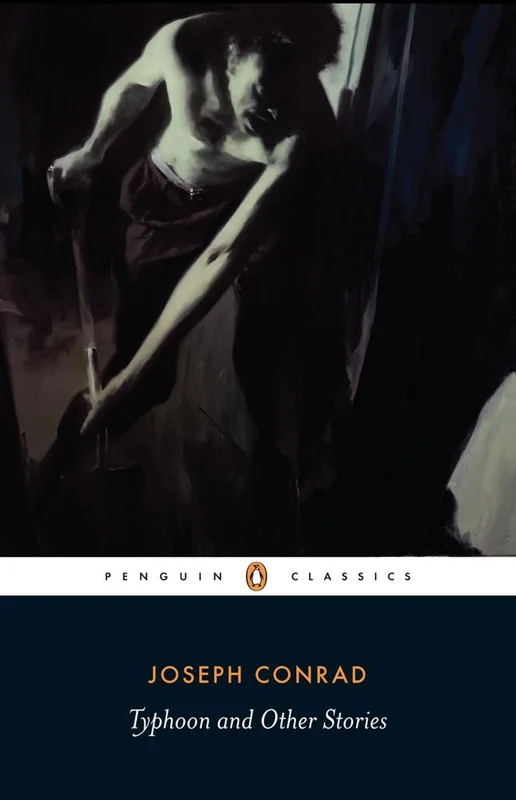
Description
By (author) Conrad, Joseph
Short /annotation:
Contains four stories, written between 1900 and 1902. One of them reveals the differences between instinct and intelligence in a partnership vital to human survival; and the other contains ”land-stories” that explore the utter isolation of an East European emigrant in England and in the other, the plight of a woman.
:
In these four stories, written between 1900 and 1902, Joseph Conrad bid gradual farewell to his adventurous life at sea and began to confront the more daunting complexities of life on land in the twentieth century. In ”Typhoon” Conrad reveals, in the steadfast courage of an undemonstrative captain and the imaginative readiness of his young first mate, the differences between instinct and intelligence in a partnership vital to human survival. ”Falk”, the companion sea-story, contrasts, as Conrad once put it, ”common sentimentalism with the frank standpoint of a more or less primitive man”, a man with a conscience, however, about the girl he desires. In one of the ”land-stories” Conrad explores the utter isolation of an East European emigrant in England; in the other, the plight of a woman ironically trapped by the unwitting alliance of two retired widowers – each blind in his own way.
Review quote:
“My own conviction, sweeping all those reaches of living fiction I know, is that Conrad’s figure stands out from the field like the Alps from the Piedmont plain.” —H. L. Mencken
Biographical note:
Joseph Conrad (originally Józef Teodor Konrad Nalecz Korzeniowski) was born in the Ukraine in 1857 and grew up under Tsarist autocracy. In 1896he settled in Kent, where he produced within fifteen years such modern classics as Youth, Heart of Darkness, Lord Jim, Typhoon, Nostromo, The Secret Agent and Under Western Eyes. He continued to write until his death in 1924.
Excerpt:
I
Captain MacWhirr, of the steamer Nan-Shan, had a physiognomy that, in the order of material appearances, was the exact counterpart of his mind: it presented no marked characteristics of firmness or stupidity; it had no pronounced characteristics whatever; it was simply ordinary, irresponsive, and unruffled.
The only thing his aspect might have been said to suggest, at times, was bashfulness; because he would sit, in business offices ashore, sunburnt and smiling faintly, with downcast eyes. When he raised them, they were perceived to be direct in their glance and of blue colour. His hair was fair and extremely fine, clasping from temple to temple the bald dome of his skull in a clamp as of fluffy silk. The hair of his face, on the contrary, carroty and flaming, resembled a growth of copper wire clipped short to the line of the lip; while, no matter how close he shaved, fiery metallic gleams passed, when he moved his head, over the surface of his cheeks. He was rather below the medium height, a bit round-shouldered, and so sturdy of limb that his clothes always looked a shade too tight for his arms and legs. As if unable to grasp what is due to the difference of latitudes, he wore a brown bowler hat, a complete suit of a brownish hue, and clumsy black boots. These harbour togs gave to his thick figure an air of stiff and uncouth smartness. A thin silver watch-chain looped his waistcoat, and he never left his ship for the shore without clutching in his powerful, hairy fist an elegant umbrella of the very best quality, but generally unrolled. Young Jukes, the chief mate, attending his commander to the gangway, would sometimes venture to say, with the greatest gentleness, “Allow me, sir,”—and possessing himself of the umbrella deferentially, would elevate the ferule, shake the folds, twirl a neat furl in a jiffy, and hand it back; going through the performance with a face of such portentous gravity, that Mr. Solomon Rout,



Reviews
There are no reviews yet.