
Description
Volume editor Dakhli, Leyla; Volume editor Wieland, Klaus
Short /annotation:
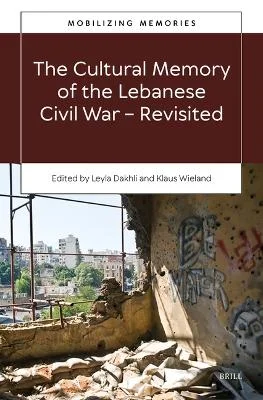
This volume is an overview of the cultural memory of the Lebanese Civil War as it has emerged over the last 30 years. Thechapters cover different discourses; narratives; and media such as archives, films, photographs, literature, and artisticinstallations.
:
This volume, edited by Leyla Dakhli and Klaus Wieland, is an overview of the cultural memory of the Lebanese Civil War,as it has emerged and evolved over the last 30 years. These narratives represent a counter-memory to the non-existentnational memory, undesired by Lebanon”s political class.
In 1991, the Amnesty Law G84/91 was enacted, granting state power impunity for all war crimes, including crimes againsthumanity. The general amnesty entailed partial amnesia; the war was to be “officially” forgotten. And yet, since the 1990s,nongovernmental organizations, archives, activists, publicists, visual artists, filmmakers, and writers have produced animpressive alternative culture of remembrance of the Lebanese Civil War, which is revisited and analyzed in this book.Contributors represent a multi-disciplinary mix, with perspectives from area studies, history, social science, literary studies,trauma and memory, and peace and conflict studies.
Table of contents:
List of Figures and TablesNotes on ContributorsIntroduction Leyla Dakhli and Klaus WielandPart 1:Fragmented Memories1 The Lebanon War (1975–1990) between the Local and the Global. Civil War or “Glocal” War? Dima de Clerck2 Hushed Zones: the Fakhani Republic in Lebanese-Palestinian Historical Memory Sune HaugbollePart 2: Material Traces – Archives, Documentaries, and Infrastructure3 War in Boxes? Archiving in Today’s Lebanon Leyla Dakhli4 Between Medium and Mediality Screening Hope and Memory in Lebanon Norman Saadi Nikro5 Transiting Beirut’s Post-Civil War Cultural Memory Claire LaunchburyPart 3: Remembrance Literature6 Co-Producers of Countermemory: the Role of Literary Scholars in Constructing the Literary Memory of the Lebanese Civil War Felix Lang7 Will the Lebanese Civil War Ever Die? the Contemporary Realities in/of Anglophone Writings and the Visual Arts Syrine Hout8 Saying the War in Contemporary Lebanese Literary and Artistic Practices: a Few Examples Nayla Tamraz9 On a Vacuum and How to Fill it: Literature at the Bedside of Failed Institutions Sandra Barrère10 German Literature and the Lebanese Civil War. Notes on Pierre Jarawan’s German-Lebanese Migration Novels Klaus WielandPart 4: Outlook11 Lebanon’s October Revolution (al-thawra 17 tishrīn) and the Civil War. Memory, Protests, and Mobilization Craig LarkinIndex
Biographical note:
Leyla Dakhli, Ph.D. (2003), is a senior-researcher at the CNRS, Centre d”Histoire sociale des mondes contemporains andassociated with the Centre Marc Bloch, Berlin. Her work deals with the study of Arab intellectuals and social history ofthe Mediterranean region. She is the Principal Investigator of the ERC-funded program DREAM (Drafting and Enactingthe revolutions in the Arab Mediterranean).
Klaus Wieland, Ph.D. (1995) and Habilitation (2020) in German studies, is maître de conférences at the Université deStrasbourg and DAAD lecturer at the American University of Beirut. His research interests include gender studies, memoryand literature, modern poetry, and intercultural literature.

Reviews
There are no reviews yet.