
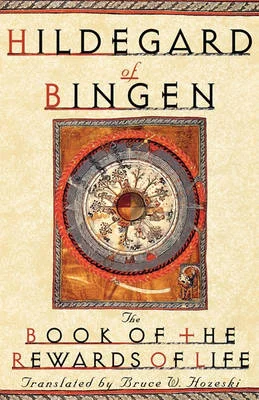
Description
By (author) Hildegard of Bingen; By (author) Hildegard of Bingen; Translated by Hozeski Bruce W.
Short /annotation
This book is a study of the human weaknesses that separate us from God and it is one of the most subtle and fascinating works ever written on the relationship of various sins to their corresponding virtues.This is the first complete translation of this important medieval visionary work.
Hildegard of Bingen, the first German mystic, is one of the most influential women in European history. Born in 1098 in Bockelheim on the Nahe River, Hildegard had her first vision at the age of six, a phenomenon she would continue to experience the rest of her life. At the behest of the archbishop of Mainz, Hildegard set upon recording her visions in writing. Her writings soon propelled her from Benedictine abbess to celebrity as determined reformer, castigatingseer, theoretical musician, patient adviser, and exorcist. A woman of extraordinarily energetic and independent mind, Hildegard wrote profusely throughout her life as a prophet, a poet, a musicalcomposer, a dramatist, a physician, and a political moralist. Indeed, her musical compositions have reached new heights in popularity, highlighting the revival of Gregorian chant currently sweeping the United States. Hildegard communicated with popes and princes, with people of both influence and humble status, always standing above the corruption, misery, and ruin–both spiritual and temporal–of the twelfth century.The second of Hildegard”s three books of visions, TheBook of the Rewards of Life (Liber Vitae Meritorum) is a study of the human weaknesses that separates us from God. Written with remarkable visual clarity, it stands as one the most subtle and fascinatingworks ever written on the relationship of various sins to their corresponding virtues. Divided into six parts, this compelling work focuses on our moral flaws, seemingly inherent in human consciousness, and the role of repentance and the virtues in re-establishing our union with God. The first and only complete English translation of this important medieval work, The Book of the Rewards of Life is indeed a handbook of life.
Review quote
“With care and graceful style, Bruce Hozeski has rendered this important but little-known work by one of medieval Europe”s great women mystics. This is a valuable contribution to a growing inventory of resources in the history of spirituality.”–Ralph Keen, University of Iowa “This volume…discusses the human weaknesses that separate us from god, and focuses on our moral flaws, which appear to be inherent in human consciousness, while revealing the importanceof repentane and the virtues of rebuilding our union with God….If you”re looking for a handbook of life, here it is.”–Medium
Biographical note
About the Translator: Bruce W. Hozeski is Professor of English at Ball State University. Largely responsible for the establishment of Hildegard studies in the United State beginning in the 1960s, he is the founder of the International Society of Hildegard von Bingen Studies.
Publisher”s notice
About the Translator: Bruce W. Hozeski is Professor of English at Ball State University. Largely responsible for the establishment of Hildegard studies in the United State beginning in the 1960s, he is the founder of the International Society of Hildegard von Bingen Studies.
Feature
The first and only English translation of this important work
Review quote: previous edition
“With care and graceful style, Bruce Hozeski has rendered this important but little-known work by one of medieval Europe”s great women mystics. This is a valuable contribution to a growing inventory of resources in the history of spirituality.”–Ralph Keen, University of Iowa “This volume…discusses the human weaknesses that separate us from god, and focuses on our moral

Reviews
There are no reviews yet.