
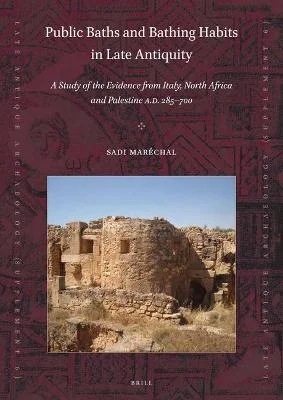
Description
By (author) Maréchal, Sadi
Short /annotation:
This book examines the survival, transformation and eventual decline of Roman public baths and bathing habits in Italy, North Africa and Palestine during Late Antiquity.
:
In this book Sadi Maréchal examines the survival, transformation and eventual decline of Roman public baths and bathing habits in Italy, North Africa and Palestine during Late Antiquity. Through the analysis of archaeological remains, ancient literature, inscriptions and papyri, the continued importance of bathhouses as social hubs within the urban fabric is demonstrated, thus radically altering common misconceptions of their decline through the rise of Christianity and elite seclusion. Persistent ideas about health and hygiene, as well as perpetuating ideas of civic self-esteem, drove people to build, restore and praise these focal points of daily life when other classical buildings were left to crumble.
Table of contents:
ForewordList of IllustrationsAbbreviationsIntroduction Why Baths Again? General Aims and Outline of the Research Geographical Framework Chronological Framework Methodology and Sources The Structure of the Book Notes on Terminology Notes on Abbreviations1 General Introduction to Roman Baths and Earlier Research onLate Antique Baths General Introduction to Roman Baths and Bathing Habits Technology of the Baths The Functioning of the Heating System Water Management of Baths Decoration Popularity of Bathhouses Earlier Research on Late Antique Baths2 Written Evidence of Baths Late Antique Literature Legal Documents Epigraphic Evidence Papyrological Evidence3 Archaeological Evidence Introduction Rome Ostia Cuicul Thamugadi Carthage Sufetula Ptolemais Scythopolis Archaeological Evidence of Early Hammams4 Continuity and Change in Late Antique Public Baths and Bathing Habits Architecture Bath Technology Public Baths and Their Contexts Decay or Continuity of Baths and Bathing HabitsEpilogue—The Transition to the Hammams General Concluding Remarks and Prospects for Future ResearchAppendix 1: Late Antique Inscriptions Mentioning Baths Introduction Inscriptions from the Italian Peninsula Inscriptions from North Africa Inscriptions from PalestinaAppendix 2: Late Antique Papyri Mentioning BathsAppendix 3: Lists of Late Antique Baths, Possible Baths and Continued Useof BathsGlossaryBibliography Primary Sources Modern SourcesGazetteerIntroduction Key to the General Plans Baths in the Italian Peninsula, Sicily and Sardinia Baths in Roman North Africa New Construction Baths in Cyrenaica Baths in Egypt Ecclesiastical Baths Fortress Baths Baths in PalestinaIndexLate Antique Archaeology
Review quote:
“This book will be a welcome reference resource to scholars interested in the intersection between society and the urban built environment in the Late Antique Roman world. […] This is a work of reference which interested academics will find to be a welcome resource for understanding Late Antique built environments. Maréchal pays strict attention to space and time and casts a very wide net for the types of data catalogued in this volume. The eight urban case studies in particular offer a comprehensive view of Late Antique cities as spaces that constantly changed alongside the needs of their residents. Maréchal keeps his readers cognizant that this study covers well-trodden ground—indeed the introduction even opens with the question ‘Why Baths Again?’—but the study’s strengths lie in the meticulous manner in which the data has been collected. By assembling data from hundreds of archaeological reports, standardizing representations of their plans, supplementing them with maps and colour photographs, and summarizing their findings in English, this volume significantly increases acc


Reviews
There are no reviews yet.