
Description
Was Edward Snowden a patriot or a traitor?
Just how far do American privacy rights extend?
And how far is too far when it comes to government secrecy in the name of security?
These are just a few of the questions that have dominated American consciousness since Edward Snowden exposed the breath of the NSA’s domestic surveillance program.
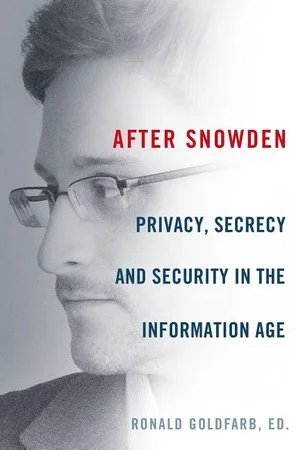
In these seven previously unpublished essays, a group of prominent legal and political experts delve in to life After Snowden, examining the ramifications of the infamous leak from multiple angles:
– Washington lawyer and literary agent
RONALD GOLDFARB acts as the book’s editor and provides an introduction outlining the many debates sparked by the Snowden leaks.
– Pulitzer Prize winning journalist
BARRY SIEGEL analyses the role of the state secrets provision in the judicial system.
– Former Assistant Secretary of State
HODDING CARTER explores whether the press is justified in unearthing and publishing classified information.
– Ethics expert and dean of the UC Berkley School of Journalism
EDWARD WASSERMAN discusses the uneven relationship between journalists and whistleblowers.
– Georgetown Law Professor
DAVID COLE addresses the motives and complicated legacy of Snowden and other leakers.
– Director of the National Security Archive
THOMAS BLANTON looks at the impact of the Snowden leaks on the classification of government documents.
– Dean of the University of Florida Law School
JON MILLS addresses the constitutional right to privacy and the difficulties of applying it in the digital age.




Reviews
There are no reviews yet.