
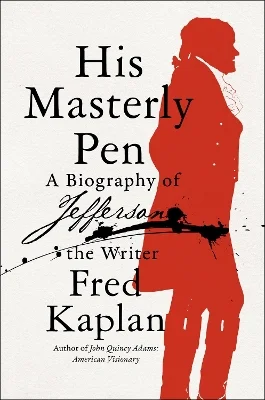
Description
By (author) Kaplan, Fred
:
As he did for Abraham Lincoln and John Quincy Adams, award-winning biographer Fred Kaplan offers a fresh, illuminating look at the life of Thomas Jefferson and his contributions as a writer.
In this unique biography, Fred Kaplan emphasizes Thomas Jefferson’s genius with language and his ability to use the power of words to inspire and shape a nation. A man renowned for many talents, writing was one of the major activities of the statemen’s life, though much of his best, most influential writing—with the exception of the letters he wrote up to his death, numbering approximately 100,000—was done by 1789, when Jefferson was just forty-six. All of his works—from his earliest correspondence; his essays and proclamations, including A Summary View of British America, The Declaration of Independence, and Notes on the State of Virginia; his religious and scientific writings; his inaugural addresses; his addresses to Indian nations; and his exchanges with Washington, Madison, Hamilton, John and Abigail Adams, and dear friends such as Maria Cosway—demonstrate his remarkable intelligence, prescient wisdom, and literary flair and reveal the man in all his complex and controversial brilliance.
In His Masterly Pen, readers will find a new appreciation of Jefferson as a whole, of his strengths and weaknesses, and particularly of the degree to which his writing skills—which James Madison admired as “the shining traces of his pen”—are key to his personality and public career. Though Jefferson could wield his pen with unrivaled power, he was also a master of using words to both reveal and conceal from others and himself the complications, the inconsistencies, and the contradictions between his principles and his policies, between his head and his heart, and between his optimistic view of human nature and the realities of his personal situation and the world he lived in.
Review quote:
“In His Masterly Pen, a thoroughly engrossing study of Thomas Jefferson, Fred Kaplan demonstrates that he, too, wields a masterly pen. . . . The skill with which the author wields his own masterly pen ensures a better understanding of this brilliant and talented 18th-century man who could not fully escape the moral failings of his social class or the weaknesses of his own character as he helped give birth to a new nation. . . . [A] nicely paced and well-written narrative.” — Washington Post“Kaplan smoothly combines analysis of Jefferson’s rhetorical strategies with an authoritative portrayal of his world. A sensitive probing of a complex man.” — Kirkus Reviews (starred review)”Kaplan fluently, and in fascinating detail, portrays all aspects of Jefferson’s character.” — Portland Press Herald”Fred Kaplan’s bona fides as a biographer should immunize him against the obvious charge: ”Oh, no, not another book about Thomas Jefferson.” Fortunately, Kaplan’s trademark skills shine through His Masterly Pen: exhaustive research; the instincts of a born storyteller; and a keen sense of irony and paradox. And there is a fresh idea. Namely, that Jefferson’s verbal felicity often deluded him into believing that an uplifting idea on paper assured its triumph in the world.” — Joseph J. Ellis, author of The Cause: The American Revolution and its Discontents.Kaplan . . . . delves into more private writings, including a series of “personally expressive and revealing” letters Jefferson wrote to Maria Cosway . . . . Kaplan draws out some revealing themes in Jefferson’s writing, including his hypocritical use of the “slavery trope” to describe the plight of American colonists under the British crown; the tension between his support for “small independent farmers” and his membership among the elite class of landowners who accumulated most of the country’s wealth; and his paternalistic tone when addressing Native American tribal leaders. — Publishers


Reviews
There are no reviews yet.